Sunday, June 16, 2013

Barrick Hits 361 Meters of 1.47 gpt Gold at Spring Valley, Nevada

The Humboldt Range West-Central Nevada
Barrick Hits 361 Meters of 1.47 gpt Gold at Spring Valley, Nevada


Midway Reports 361 Meters of 1.47 gpt Gold by Barrick at Spring Valley, Nevada

"Denver, Colorado – Midway Gold Corp. ("Midway" or the "Company") (MDW:TSX-V; MDW:NYSE-MKT) provides an update on progress at the Spring Valley Project, Pershing County, Nevada. Development drilling, designed to upgrade the quality of the resource, continues to produce excellent intercepts.  Barrick Gold Exploration Inc. ("Barrick") is earning into the project and their 2013 budget for Spring Valley includes $10 million for exploration and development.

Ken Brunk, Midway’s President and CEO said, “Barrick continues an accelerated pace to earn-in at our Spring Valley project. Based on their 2013 budget, we expect Barrick to earn a 70% interest in the fall of this year. We were very pleased to receive yet another set of positive results from their current exploration work and we anticipate this year will bring additional good news as the project advances through scoping and into pre-feasibility.”

Development Drilling

Development drilling in the resource area is designed to expand the resource within the estimated pit perimeter and to upgrade the quality of those resources for future engineered reserve calculations. Additional expansion potential remains at depth and to the north of the deposit.

Recent drilling highlights include:

  • SV13-621: 361 meters of 1.47 grams per tonne (gpt) gold starting at 35 meters depth. The interval included 21 meters of 7.54 gpt gold and 23 meters of 3.02 gpt gold
  • SV13-620: 120 meters of 0.75 gpt gold including 18 meters of 2.43 gpt gold 35 meters of 0.79 gpt gold including 1.5 meters of 4.08 gpt gold and 21 meters of 1.20 gpt gold including 1.5 meters of 5.59 gpt gold

During the first quarter, Barrick completed 4,552 meters of reverse circulation (RC) and 3,148 meters of core drilling. This drilling included nine core holes and six reverse circulation holes. An additional five holes were in progress at the end of the first quarter. Assays remain pending for most of the 2013 drill holes.... Barrick has reported the internal scoping study is still in progress by the project’s evaluation group. This will advance into a prefeasibility study if approved by management after a peer review. Work underway includes:

  • Resource modeling
  • Metallurgical testing
  • Hydrologic data for dewatering studies
  • Core drilling for waste rock and ore geochemical characterization
  • Design and evaluation of initial mine layout alternatives
  • Initial pit slope stability studies
  • Initial base line surveys

Earn-In Update

In April, Barrick reported that they had exceeded the cumulative expenditure requirement of $30M to earn a 60% interest in the property. They also exercised their option to spend an additional $8 million to earn a 70% interest.

The Barrick budget for Spring Valley in 2013 includes $8.0 million for exploration, primarily drilling, and $2 million for development work. Development work includes completing the scoping study and initiating a prefeasibility study if supported by the scoping study results. Midway anticipates by the end of 2013 Barrick will complete cumulative expenditures of $38 million to earn a 70% interest in the project, which would be a full year ahead of the contractual requirements."


Significant Drill Results at Midway Gold’s Spring Valley JV with Barrick Gold Confirm Potential for Terraco’s Royalty Interest
--- Chris Berry – Morning Notes 2013-07-05

Terraco Gold Update (TEN :TSXV, TCEGF :OTCBB)

"Last week, Midway Gold (MDW :NYSE.MKT, MDW :TSX) updated their investor base with news highly significant to Terraco Gold, their neighbor to the south of the JV’s Spring Valley project. MDW reported several results from development drilling underway at Spring Valley. Two intercepts were of note:

- Hole SV13-621 returned 361 meters of 1.47 grams per tonne (gpt) goldstarting at 35 meters depth. The interval included 21 meters of 7.54 gpt gold and 23 meters of 3.02 gpt gold

- Hole SV13-620 returned 120 meters of .75 gpt gold including 18 meters of 2.43 gpt gold; 35 meters of .79 gpt gold including 1.5 meters of 4.08 gpt gold and; 21 meters of 1.20 gpt gold including 1.5 meters of 5.59 gpt gold.

Furthermore, MDW’s joint venture partner on the project, Barrick Gold (ABX :NYSE), has completed its requirement for a 60% earn-in on the project (by having spent $30 million on the property) and will be spending at least an additional $8 million in 2013 to attain a 70% share of the project.  It appears to us that these drill results indicate a major structure at Spring Valley.

We offer our congratulations to the team at ABX / MDW for their many successes, particularly Ken Brunk. We want to draw your attention to the potential benefits this news has for TEN and their royalty interest in Spring Valley. As a brief refresher, TEN has up to a 3% NSR on the Spring Valley property, so as the resource grows, so, too, does the value of the royalty. This is a crucial point of potential wealth creation to remember.  Make no mistake, we believe these new intercepts may significantly increase the potential for wealth creation Below we include a map of the Spring Valley deposit (outlined in black) showing TEN’s royalty interests. The drill results mentioned above are located in the red shaded area.
Terraco Gold's Royalty on the Barrick-Midway Spring Valley Gold Project (Click on image to enlarge)

What is important here is that the two holes we mentioned above, SV13-620 and SV13-621 are located right in the middle of the claim block where TEN holds the net smelter returns royalty interest. The implications of this are straightforward – as Spring Valley continues its development and ostensibly becomes a larger more valuable deposit, the royalty interest TEN has on the property also increases in value.

In an era where junior mining finance is more than challenging, to say the least, a royalty such as this provides TEN CEO Todd Hilditch flexibility (we have called this “optionality” in the past) in terms of how he and his team choose to push forward with their two properties – Moonlight in Nevada and Nutmeg Mountain in Idaho.

Based on our conservative “back of the envelope” math, the royalty interest could be worth as much as $80 million to TEN today. We want to stress that we are using data provided from MDW’s NI 43-101 on Spring Valley and adding our own assumptions to arrive at this number.


The Disconnect

What is notable is the value of the royalty interest ($80 million) versus the current market capitalization of TEN: ($19.22 million fully diluted). We believe there is a very clear disconnect between the intrinsic value of the company and its market value.

The Rationale for Considering TEN as an Investment

We view the rationale for owning TEN as straightforward. As the global economy struggles to get back on its feet, Central Bankers are adamant in fomenting economic growth and inflation through expansion of their balance sheets. As we have demonstrated in recent editions of Morning Notes, this policy has not had its intended effect.

Recent discussions of “tapering” quantitative easing programs in the US are likely just Chairman Bernanke “jawboning” the markets and do not appear to be realistic. As a result, additional balance sheet expansion and printing of money seems likely which means a weaker dollar in the long run. This bolsters the case for gold in a portfolio as a hedge against eventual inflation and as a store of value.

This would include ownership of gold junior mining shares where the possibility exists to profit from share price leverage. Those juniors that can demonstrate financial sustainability and profit from production in a non-dilutive manner should be given consideration by you in your own due diligence processes. We continue to believe Terraco Gold is one such opportunity and have valued it thus on the DiscoveryScoreboard. It is a true contrarian play at this point because we think it is sustainable.”

Chris Berry, MBA – Morning Notes 2013-07-05

Chris Berry Bio:

With a life-long interest in geopolitics and the financial issues that emerge from these relationships, Chris founded House Mountain Partners LLC in 2010. House Mountain firmly believes that the emerging Quality of Life Cycle emanating from Asia is a "game changer" which will affect every one of us throughout the world for decades. With that in mind, the firm focuses on the intersection of three topics: the evolving geopolitical relationship between emerging and developed economies, the commodity space, and junior mining and resource stocks positioned to benefit from this phenomenon. Chris spent 13 years working across various roles in sales and brokerage on Wall Street before founding House Mountain Partners. He also co-authors a newsletter with his father Dr. Michael Berry, "Morning Notes by Dr. Michael Berry". He holds an MBA in Finance with an international focus from Fordham University, and a BA in International Studies from The Virginia Military Institute.


Thursday June 6, 2013, 4:30pm PDT
By Andrew Topf - Exclusive to Gold Investing News

"A gold junior with a net smelter returns royalty on a property in Nevada joint-ventured between Barrick Gold (NYSE:ABX, TSX:ABX) and Midway Gold (TSXV:MDW) has been getting traction in the market and is on the radar of at least one influential commodities analyst/ newsletter writer.
In a note to shareholders published on May 30th, Terraco Gold (TSXV:TEN) said that Barrick (NYSE:ABX, TSX:ABX), the world’s second largest gold company by market cap, now holds a 60 percent interest in the Spring Valley project located in Pershing County, Nevada — which it earned by investing over $30 million in exploration expenditures.
That is significant for Terraco because the Vancouver-based junior has a net smelter returns (NSR) royalty at Spring Valley whereby Terraco has the option to acquire up to a 3 percent NSR on claims covering the ore body.
The latest drill results published by Midway Gold on May 29th showed high-grade gold at Spring Valley, including intercepts of 1.47 grams per tonne including 21 meters of 7.54 g/t and 23 meters of 3.02 g/t.
“The Barrick path to production and therefore potential future cash flow from the project should create sizeable value with Terraco’s (up to) 3% NSR royalty and royalty option on claims covering the known ore body at Spring Valley,” Terraco said, noting that Barrick plans to spend another $8 million to further drill the property, which would hike Barrick’s interest to 70 percent.
“Barrick’s continued great work at Spring Valley is a definite highlight for the mining space and the project is one of the fastest advancing path to production gold stories in Nevada.”
The deposit contains an NI 43-101 compliant 4.1 million ounces of gold, with Barrick’s 2009 and 2010 drilling confirming gold mineralization open to the north and at depth.


Terraco drilling approximately 3,400 ft north of the Barrick discovery along the Blackridge Fault (Click on Image to Enlarge)
The market has rewarded both Midway Gold and Terraco for their recent progress at Spring Valley. Midway’s stock has risen 6 percent over the past three months and 20 percent over the past month, while Terraco’s has done even better, with an 11 percent and 25 percent gain over the same time frames.
Terraco has not escaped the notice of House Mountain Partners founder Chris Berry, who wrote in a recent edition of Morning Notes that the growth of the resource at Spring Valley also means significant upside potential for Terraco:
“It appears to us that these drill results indicate a major structure at Spring Valley,” wrote Berry. “Make no mistake, we believe these new intercepts may significantly increase the potential for wealth creation.”
How much wealth? Berry estimates in the note that the royalty interest could be worth as much as $80 million, which is roughly four times the market cap of Terraco, making the company significantly undervalued: “We believe there is a very clear disconnect between the intrinsic value of the company and its market value.”
Berry also observes that the NSR provides Terraco with options to move forward on its other main projects, Moonlight in Nevada and Almaden-Nutmeg Mountain in Idaho. Of those two properties, Almaden is the more advanced, with 864,000 ounces of gold in the measured and indicated categories. Moonlight is about 8 kilometers north of the producing Coeur d’Alene Rochester silver-gold mine and has been minimally explored.
Securities Disclosure: I, Andrew Topf, hold no direct investment interest in any company mentioned in this article."

TEN Chart June 2010 - Present (Click on image to Enlarge)

Johnston-Sequoia Commentary:


As many of our readers know - I've tracked the development of this Humboldt Range in West-central Nevada since May 27th of 2008.  I've never believed more in the potential and significance of the this evolving precious metals district as I do today.  Midway and Terraco will both benefit (from my perspective) greatly from this discovery as Barrick continues to refocus on the area that has buttered their bread for so many years (Nevada).  As the premium paid for physical gold continues to decouple from the paper market (which is seemingly happening at an alarming pace) - new discovery's will be the only place left to capture a position if (or more realistically - when) paper markets and precious metals ETF's become exposed.

A picture as they say is worth 1,000 words (and perhaps $2,200 per ounce of physical gold in the short to medium term):

10,000 people line up to buy gold in China - submitted by Zerohedge (Click on Image to Enlarge)

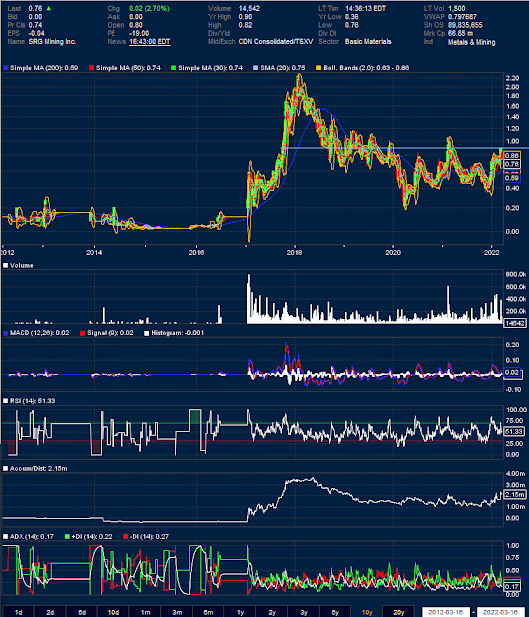
Finally, as you see in the chart above - TEN's share price has declined by - 48.28% (since December 22nd 2011) in the same time period that the company acquired approximately $80,000,000 in assets and $6,000,000 in cash without issuing a share. If that is not deep value investing - I don't know what is...

Johnston-Sequoia Capital Corp. owns shares in Terraco Gold - I own shares in Terraco Gold and am an advisor of the company.

To all of our readers both young & "distinguished" - Happy Fathers day and hope you're all enjoying the weekend. 

Your editor standing on the Blackridge Fault approximately 3,200 ft north the Barrick discovery (Click on Image to Enlarge)

Saturday, April 20, 2013

Special Edition: Is Cash no Longer King?


Is Cash No Longer King?
Stopping the Clock on Currency Debasement

“Since 1971 (when Nixon closed the gold window) the Dow Jones increased 15-fold and the dollar gold price increased 45-fold. What does this really mean?

The stock markets, the economies, the GDPs, the increasing debt loads, and the financial industries are all corrupted and falsified. The Western economy has increasingly become a debt addict. Debt grows ever faster than the real economy.

The blatant falsifications of the financial industry served to hide the ongoing drama (debt/GDP). The entire financial industry doesn't represent the economy and its over productive debt load any more. That's why the Fed has to falsify financial industry paper gold to hide the evolving drama.

The entire world is now increasingly aware of the gigantic catch-22 we're in. The economy and financial industry is rapidly losing appeal. The affinity for gold metal therefore grows intuitively.

Gold value (anti-debt) will rise faster than the economy and the financial industry. Those in the know will leave the existing system and will move closer and closer to gold - the wealth preserve metal. A very natural process (transition) that grows from intuition (animal spirits).

This transition is irreversible. The Fed knows this as no other (corrupt) governing body. The money system and regime will try to keep this drama hidden from public awareness. This will backfire later on, sooner rather than later.”

CIGA Patrick FG

--- JS Mineset April 18th, 2013

Spot Gold ($USD) 1978-2013 (Click on Image to Enlarge)

Fed and Bank of Japan caused gold crash

--- Ambrose Evans-Pritchard – The Telegraph April 17th, 2013


“Commodity prices have been falling since September, culminating in a rout over the past two weeks. That is a classic warning for the global economy.

It is becoming ever clearer that the roaring boom in global equities since last summer has priced in an economic recovery that does not in fact exist. The International Monetary Fund has had to nurse down its global growth forecasts yet again. We are still stuck in an old-fashioned trade depression, with pervasive over-capacity in manufacturing plant and a record global savings rate of 25% of GDP.

German car sales fell 17% in March. That should puncture the last illusions that Germany is about to pull Europe out of a self-inflicted slump.

As you can see from the chart below, the divergence between stock markets and the Deutsche Bank index of raw materials is astonishing to behold, so like the pattern in early 1929.

Click on Image to Enlarge

Steel has fallen 31% this year. Brent crude is off 17% since early February, and copper 15%.

You have to be careful reading too much into commodities, distorted by China. The time-honored cycle is a surge of investment that comes on stream at once with a lag. America's shale drive has turned the gas market upside down, diverting liquefied natural gas to Europe and Asia. Copper output in Chile rose 7% last year. The crash in the Baltic Dry Index for shipping rates is partly a tale of too many ships.

Yet excess supply does not explain the collapse in gold over the past week. Cyprus may have been an incidental trigger. If the EU-IMF Troika is determined to strong-arm the Cypriots into selling most of their pint-sized holding of 14 tonnes, it may do the same to Portugal when the time comes, and then you are talking about the world's 14th biggest holding of 382 tonnes.


Jim Rickards: Official Gold Holdings in Metric Tonnes (Click on image to Enlarge)

Bank of America says the gold crash since Friday has already discounted sales of the entire Cypriot, Portuguese and Greek gold reserves combined. "As we believe additional gold selling in the European periphery is highly unlikely, we find it hard to fully justify the sell-off," it said.

The central banks of China and the emerging powers bought 535 tonnes last year to escape dollars and euros, the biggest wave of state purchases since 1964. Their strategy is to buy the dips, and they are no fools. The head of China's reserve manager "SAFE" used to run a US hedge fund.

They won't try to catch a "falling knife", preferring to wait until the dust settles. The upward trend of the great bull market has been broken. The technical damage is brutal. Bank of America expects a further drop to $1,200. Be patient.

My view is that the US Federal Reserve and the Bank of Japan "caused" the gold crash. The rest is noise. The Fed assault began in February when it published a paper warning that the longer quantitative easing continues, the harder it will be for the bank to extricate itself.

The report was co-written by former Fed governor Frederic Mishkin, often deemed Ben Bernanke's "alter ego". It said the Fed's capital base could be wiped out "several times" once borrowing costs climb. The window will start shutting by 2014, with trouble then compounding at a "dramatic" pace.

This was a shock. It suggested that the Fed has lost its nerve, and will think long and hard before launching a fresh blitz of money if growth falters.

Then came last week's Fed Minutes, with hints of tapering off QE earlier that expected. That was the next shock. What they seemed to be saying is that the US economy is groping it way back to normality, that the era of silly money is over, that the dollar will stand tall again.

If that were the case, gold should fall. But it is not the case. The US economy is growing below the Fed's own "stall speed" indicator. Half a million people fell out of the workforce in March. Retail sales fell in March. So did manufacturing.

The US faces fiscal tightening of 2.5% of GDP this year, the most since 1946. Ex-labour secretary Robert Reich said the effects have been disguised so far, but a "stealth sequester" is just starting: $51m of grant cuts to Brandeis university; $1m for schools in Syracuse; and so on, the reverse of the stealth stimulus before.

My guess is that the Fed will be forced to row back smartly from its exit talk, but first we must look deflation in the eyes.

As for the Bank of Japan, it had been assumed that the colossal monetary stimulus of Haruhiko Kuroda would revive the yen-carry trade, leaking $1 trillion into world asset markets. But the early evidence is the opposite. Japanese investors brought money home last week.

"Mrs Watanabe" is selling her Kiwi and Aussie bonds to bet on stocks and property at home. And she is selling gold like never before. That too is a shock.

Japan's "Abenomics" may prove a net drag on the world over coming months. It is exporting deflation through trade effects. This already visible in Korea and China, where soaring wages have eroded competitiveness. "Investors may have forgotten that yen weakness was one of the immediate causes of the 1997 Asian currency crisis and Asia’s subsequent economic collapse," said Albert Edwards from Societe Generale.

China's growth rate fell to 7.7% in the first quarter. It will fall further, though the catch-up boom in the hinterland cities of Chengdu, Chonquing, Changsa and Xi'an may have further to run.

Fitch Ratings says credit has surged from €9 trillion to €23 trillion over the past four years, a rise equal to the entire US banking system. Beijing pumped up loans yet again after its recession scare in the summer, but is gaining less traction. The GDP growth effect of credit has halved. It is the classic sign of an economy sated on debt. China too will have to deleverage.

The world is still in a contained depression. Sliding commodities tell us global money is if anything too tight. "There is a threat of deflation almost everywhere. A lot of central banks will have to follow the Bank of Japan, whatever they say now," said Lars Christensen form Danske Bank

The era of money printing is young yet. Gold will have its day again.
--- Ambrose Evans-Pritchard– The Telegraph April 17th, 2013

Gold crushed by 400 tonnes or $20 billion of selling on COMEX
--- Ross Norman | Ross Norman: Sharps Pixley April 15th, 2013

“The gold futures markets opened in New York on Friday 12th April to a monumental 3.4 million ounces (100 tonnes) of gold selling of the June futures contract (see below) in what proved to be only an opening shot. The selling took gold to the technically very important level of $1540 which was not only the low of 2012, it was also seen by many as the level which confirmed the ongoing bull run which dates back to 2000. In many traders minds it stood as a formidable support level... the line in the sand. 

Two hours later the initial selling, rumoured to have been routed through Merrill Lynch's floor team, by a rather more significant blast when the floor was hit by a further 10 million ounces of selling (300 tonnes) over the following 30 minutes of trading. This was clearly not a case of disappointed longs leaving the market - it had the hallmarks of a concerted 'short sale', which by driving prices sharply lower in a display of 'shock & awe' - would seek to gain further momentum by prompting others to also sell as their positions as they hit their maximum acceptable losses or so-called 'stopped-out' in market parlance - probably hidden the unimpeachable $1540 level.

The selling was timed for optimal impact with New York at its most liquid, while key overseas gold markets including London were open and able feel the impact. The estimated 400 tonne of gold futures selling in total equates to 15% of annual gold mine production - too much for the market to readily absorb, especially with sentiment weak following gold's non performance in the wake of Japanese QE, a nuclear threat from North Korea and weakening US economic data. The assault to the short side was essentially saying "you are long... and wrong".

June Gold Futures: Note Volume, Price, Velocity & Time - 6 minute Chart (Click on Image to Enlarge)
Futures trading is performed on a margined basis - that is to say you have to stump up about 5% of the actual cost of the gold itself making futures trades a highly geared 'opportunity' of about 20:1 - easy profit and also loss ! Futures trading is not a product for widows and orphans. The CME's 10% reduction in the required gold margins in November 2012 from $9133/contract to just $7425/contract made the market more accessible to those wishing both to go long or as it transpired, to go short. Soon after we saw the first serious assault to the downside in Dec 2012, followed by further bouts in January 2013 - modest in size compared to the recent shorting but effective - it laid the ground for what was to follow. One fund in particular, based in Stanford Connecticut, was identified as the previous shorter of gold and has a history of being caught on the wrong side of the law on a few occasions. As badies go - they fit the bill nicely.

The value of the 400 tonnes of gold sold is approximately $20 billion but because it is margined, this short bet would require them to stump up just $1b. The rationale for the trade was clear - excessively bullish forecasts by many banks in Q4 seemed unsupported by follow through buying. The modest short selling in Jan 2013 had prompted little response from the longs - raising questions about their real commitment. By forcing the market lower the Fund sought to prompt a cascade or avalanche of additional selling, proving the lie ; predictably some newswires were premature in announcing the death of the gold bull run doing, in effect, the dirty work of the shorters in driving the market lower still. 

This now leaves the gold market in an interesting conundrum - the shorter is now nursing a large gold position and, like the longs also exposed - that is to say the market is polarised between longs and shorts and they cannot both be right. Either the gold bulls - like in a game of tug-of-war - pull back and prompt the shorters to panic and buy back - or they do nothing, in which case the endless stories about the "end of gold" will see a steady further erosion in prices. At the end of the day it is a question of who has got the biggest guns - the shorts have made their play - let's see if there is any response from the longs to defend their position.”  
---  Ross Norman: Sharps Pixley April 15th, 2013

Assault On Gold Update — Dr. Paul Craig Roberts

"Gold weights are based on metric tons and Troy ounces. 500 metric tons of gold would be 16,075,000 troy ounces. This changes the arithmetic slightly but not the point

I was the first to point out that the Federal Reserve was rigging all markets, not merely bond prices and interest rates, and that the Fed is rigging the bullion market in order to protect the US dollar’s exchange value, which is threatened by the Fed’s quantitative easing. With the Fed adding to the supply of dollars faster than the demand for dollars is increasing, the price or exchange value of the dollar is set up to fall.

A fall in the dollar’s exchange rate would push up import prices and, thereby, domestic inflation, and the Fed would lose control over interest rates. The bond market would collapse and with it the values of debt-related derivatives on the “banks too big too fail” balance sheets. The financial system would be in turmoil, and panic would reign.
Rapidly rising bullion prices were an indication of loss of confidence in the dollar and were signaling a drop in the dollar’s exchange rate. The Fed used naked shorts in the paper gold market to offset the price effect of a rising demand for bullion possession. Short sales that drive down the price trigger stop-loss orders that automatically lead to individual sales of bullion holdings once their loss limits are reached.
According to Andrew Maguire, on Friday, April 12, the Fed’s agents hit the market with 500 tons of naked shorts. Normally, a short is when an investor thinks the price of a stock or commodity is going to fall. He wants to sell the item in advance of the fall, pocket the money, and then buy the item back after it falls in price, thus making money on the short sale. If he doesn’t have the item, he borrows it from someone who does, putting up cash collateral equal to the current market price. Then he sells the item, waits for it to fall in price, buys it back at the lower price and returns it to the owner who returns his collateral. If enough shorts are sold, the result can be to drive down the market price.
CBC Special: The Secret World of Gold 
A naked short is when the short seller does not have or borrow the item that he shorts, but sells shorts regardless. In the paper gold market, the participants are betting on gold prices and are content with the monetary payment. Therefore, generally, as participants are not interested in taking delivery of the gold, naked shorts do not need to be covered with the physical metal.
In other words, with naked shorts, no physical metal is actually sold.
People ask me how I know that the Fed is rigging the bullion price and seem surprised that anyone would think the Fed and its bullion bank agents would do such a thing, despite the public knowledge that the Fed is rigging the bond market and the banks with the Fed’s knowledge rigged the Libor rate. The answer is that the circumstantial evidence is powerful.
Consider the 500 tons of paper gold sold on Friday. Begin with the question, how many ounces is 500 tons? There are 2,000 pounds to one ton. 500 tons equal 1,000,000 pounds. There are 16 ounces to one pound, which comes to 16 million ounces of short sales on Friday.
Who has 16 million ounces of gold? At the beginning gold price that day of about $1,550, that comes to $24,800,000,000. Who has that kind of money?
What happens when 500 tons of gold sales are dumped on the market at one time or on one day? Correct, it drives the price down. Investors who want to get out of large positions would spread sales out over time so as not to lower their sales proceeds. The sale took gold down by about $73 per ounce. That means the seller or sellers lost up to $73 dollars 16 million times, or $1,168,000,000.
Who can afford to lose that kind of money? Only a central bank that can print it.
I believe that the authorities would like to drive the gold price down further and will, if they can, hit the gold market twice more next week and put gold at $1,400 per ounce or lower. The successive declines could perhaps spook individual holders of physical gold and result in actual net sales of physical gold as people reduced their holdings of the metal.
However, bullion dealer Bill Haynes told kingworldnews.com that last Friday bullion purchasers among the public outpaced sellers by 50 to 1, and that the premiums over the spot price on gold and silver coins are the highest in decades. I myself checked with Gainesville Coins and was told that far more buyers than sellers had responded to the price drop.
Unless the authorities have the actual metal with which to back up the short selling, they could be met with demands for deliveries. Unable to cover the shorts with real metal, the scheme would be exposed.
Do the authorities have the metal with which to cover shorts? I do not know. However, knowledgeable dealers are suspicious. Some think that US physical stocks of gold were used up in sales in efforts to disrupt the rise in the gold price from $272 in December 2000 to $1,900 in 2011. They point to Germany’s recent request that the US return the German gold stored in the US, and to the US government’s reply that it would return the gold piecemeal over seven years. If the US has the gold, why not return it to Germany?
The clear implication is that the US cannot deliver the gold.
Andrew Maguire also reports that foreign central banks, especially China, are loading up on physical gold at the low prices made possible by the short selling. If central banks are using their dollar holdings to purchase bullion at bargain prices, the likely results will be pressure on the dollar’s exchange value and a declining market supply of physical bullion. In other words, by trying to protect the dollar from its quantitative easing policy, the Fed might be hastening the dollar’s demise.
Possibly the Fed fears a dollar crisis or derivative blowup is nearing and is trying to reset the gold/dollar price prior to the outbreak of trouble. If ill winds are forecast, the Fed might feel it is better positioned to deal with crisis if the price of bullion is lower and confidence in bullion as a refuge has been shaken.
In addition to short selling that is clearly intended to drive down the gold price, orchestration is also indicated by the advance announcements this month first from brokerage houses and then from Goldman Sachs that hedge funds and institutional investors would be selling their gold positions. The purpose of these announcements was to encourage individual investors to get out of gold before the big boys did. Does anyone believe that hedge funds and Wall Street would announce their sales in advance so the small fry can get out of gold at a higher price than they do?
If these advanced announcements are not orchestration, what are they?
I see the orchestrated effort to suppress the price of gold and silver as a sign that the authorities are frightened that trouble is brewing that they cannot control unless there is strong confidence in the dollar. Otherwise, what is the point of the heavy short selling and orchestrated announcements of gold sales in advance of the sales?"

Johnston-Sequoia Commentary:

"If you can keep your head when all about you are losing theirs and blaming it on you, If you can trust yourself when all men doubt you, But make allowance for their doubting too..."

Is Cash No longer King?

Since the news broke of the Cyprus bail-ins it has appeared that the entire world is up in smoke.  Taking into consideration all that has happened in the past four weeks allow us to take a step back and ask a philosophical question along the lines of "If a tree falls in the forest..." - The question is; If you're standing in the forest and all trees fall down around you at the same time - do you notice if someone steals the wallet out of your back pocket?

The Great Divergence:

This from my perspective is the real story for the next 19 months (and arguably is the only metric one needs to assess). The chart below illustrates the great divergence between the US Dollar and Spot Gold which began in November of 2008.  Beginning Monday April 15th, 2013 we may begin to witness the greatest divergence in history between paper currencies and the price of gold.  The demand and real consumption of the physical metal over the past week has unprecedented.  Consider each of the charts below and what they ultimately mean.  As my friend in cow country suggests "we cannot keep measuring things with a broken measuring stick..."

Please click on the image below and note the volume, price, velocity and time of the sell off in gold (The RSI and MACD on Gold are at oversold levels not seen since 1983).  I see normal people walking into the Vancouver Buillion Exchange every day and buying physical gold and silver (myself and those closest to me included).  Please consider protecting yourself and consider taking notes in the Doug Casey interview below.


A Picture is worth 1000 words: Spot Gold vs $USD - 10 year Chart (Click on image to enlarge)
Purchasing Power of the $US 1971-2009 vs Currency in Circulation (this visual has gotten dramatically worse since 2009 as well): Click on Image to Enlarge

Consumer Price Index for All Urban Consumers: Purchasing Power of the Consumer Dollar 1910-2013: Click on Image to Enlarge

In the Meantime:

Gold Buying Frenzy Continues: China, Japan, And Australia Scramble For Physical

 Tyler Durden: Zero Hedge April 17th, 2013

"We noted here that the plunge in the paper price of gold (and silver) had prompted considerable renewed demand for physical and now it seems the scramble among the "more stable investor base" is increasing. The shake out of ETFs and futures has left the Australian mint short of deliverables and Japanese and Chinese gold retailers seeing a "frenzied" surge in demand. The customers are not just the 'rich' or 'elderly'; in China "they tend to wear water shoes and come directly from the market...;" in Australia, "the volume of business... is way in excess of double what we did last week,... there’s been people running through the gate," and Japanese individual investors doubled gold purchases yesterday at Tokuriki Honten, the country’s second-largest retailer of the precious metal. The panic selling by a weaker 'imminent inflation-based' investor base has sparked physical shortages - "there’s been significant sales made as people see this as great value." It seems our previous discussions of a rotation from paper to physical were correct and this physical demand will eventually leak back into the paper markets. 
Australia (via The Age):
Gold sales from Perth Mint, which refines nearly all of the nation’s bullion, have surged after prices plunged, adding to signs that the metal’s slump to a two-year low is spurring increased demand. 

“The volume of business that we’re putting through is way in excess of double what we did last week,” Treasurer Nigel Moffatt said, without giving precise figures. “There’s been people running through the gate.” 

“There’s been significant sales made as people see this as great value,” Mr Moffatt said. “Gold owners are very reactive to significant market movements.” 

The Perth Mint’s sales of gold coins climbed 49 per cent to 97,541 ounces in the three months ended March 31 from a year earlier

China (via China News):
Beijing gold store two hours to sell 20,000 grams of gold bullion trading volume of nearly 200 million
and (via YCWB):
People have to rush to buy gold, ... gold bullion out of stock yesterday, investors yesterday to spend as much as 600 million yuan to buy 20 kilograms of gold bars 

The mad pursuit gold insufficiency is not just a game for the rich. Yesterday, the Yangcheng Evening News reporter learned from the East flowers to Bay store, many growers, pork traffickers, fishmonger recently put down his job went straight to the mall to buy gold.

Japan (via Reuters):
Some Japanese also harbor fears that the expansionary monetary and fiscal policies dubbed "Abenomics", coupled with a national debt more than twice as large as annual economic output, could trigger a crisis down the line. 

Skeptics about the radical attempt to reflate the economy -- or those simply worried that a slide in the yen that began in anticipation of Abe's election victory last December will continue unabated -- are still buying gold, dealers say. 

"Investors in gold are convinced that Japan's fiscal position will get worse," said Wakako Harada, general manager of Japan's top bullion house, Tanaka Kikinzoku Kogyo. 

"What I see at our counter is that more people are getting worried about Japan. That's why we are seeing a lot of buying.".. 

"In contrast this time, we are seeing interest to buy on dips to take exposures to gold,".. 

"Investors are using this opportunity to buy gold to diversify beyond bonds, stocks and the yen currency as Japan's fiscal situation could deteriorate."
(via The Age):

Japanese individual investors doubled gold purchases yesterday at Tokuriki Honten, the country’s second-largest retailer of the precious metal.
(Reuters) - When he woke up to news of a collapse in gold prices, Yujiro Yamashita, 63, made his way to Tokyo's posh Ginza district to buy the precious metal for the first time in 20 years.
Yamashita and other contrarian, individual Japanese investors understand that gold is a volatile investment, but say that buying the precious metal is better than the alternatives. 

They cite worries that the new high-octane economic policies of Prime Minister Shinzo Abe, designed to shock the economy out of nearly two decades of deflation, might prompt a collapse in the yen or that the recent rally in stock prices might fizzle.

"Bank deposits generate virtually zero interest," said Yamashita, as he bought two gold coins worth almost $5,000 on Tuesday with some of the money he made from the recent sale of his house.

"Stock prices have jumped like crazy but there are concerns about the risk of war (from North Korea). So I try to buy gold when I can."

Japan's demand for gold, amid a global slump that saw prices tumble around $125 an ounce on Monday, owes partly to the declining value of the yen against the dollar.

Although global gold prices have been in retreat since October and are down about 20 percent this year, after an unbroken 12 years of gains, the weaker Japanese currency drove yen-denominated gold prices to near record highs last week.

As a result of the currency effect, yen-based investors in gold who bought during the worst of the global slump in late 2008 would still be sitting on a 118 percent gain even after Monday's declines, the biggest daily drop ever in dollar terms."

---  Tyler Durden: Zero Hedge April 17th, 2013


The Elephant in the Room:


Schiff: 2/3 of America to Lose Everything Because of This Crisis

--- Peter Schiff: Market Morning 

"A record breaking stock market is distorting a frightening reality:  The U.S. is being eaten alive by a horrific cancer that will ultimately destroy the economy and impoverish the vast majority of its citizens.

That's according to Peter Schiff, the best-selling author and CEO of Euro Pacific Capital, who delivered his harsh warning to investors in a recent interview on Fox Business.

"I think we are heading for a worse economic crisis than we had in 2007," Schiff said.  "You're going to have a collapse in the dollar...a huge spike in interest rates... and our whole economy, which is built on the foundation of cheap money, is going to topple when you pull the rug out from under it."

Schiff says that, despite "phony" signs of an economic recovery, the cancer destroying America stems from a lethal concoction of our $16 trillion federal debt and the Fed's never ending money printing.

Currently, Bernanke and company is buying $1 trillion of Treasury and mortgage bonds a year. That's about $85 billion per month against a budget deficit that is about the same level.

According to Schiff, these numbers are unsustainable. And the Fed has no credible "exit strategy."

Eventually interest rates will rise... and when they do, Schiff says, stocks will tank and bonds dip to nothing. Massive new tax hikes will be imposed and programs and entitlements will be cut to the bone.

 "The crisis is imminent," Schiff said.  "I don't think Obama is going to finish his second term without the bottom dropping out. And stock market investors are oblivious to the problems."

 "We're broke, Schiff added.  "We owe trillions. Look at our budget deficit; look at the debt to GDP ratio, the unfunded liabilities. If we were in the Eurozone, they would kick us out."

Schiff points out that the market gains experienced recently, with the Dow first topping 14,000 on its way to setting record highs, are giving investors a false sense of security.  

"It's not that the stock market is gaining value... it's that our money is losing value. And so if you have a debased currency... a devalued currency, the price of everything goes up. Stocks are no exception," he said.

"The Fed knows that the U.S. economy is not recovering," he noted. "It simply is being kept from collapse by artificially low interest rates and quantitative easing. As that support goes, the economy will implode."


A noted economist, Schiff has been a fierce critic of the Fed and its policies for years. And his warnings have proven to be prophetic.

In August 2006, when the Dow was hitting new highs nearly every day, Schiff said in an interview: "The United States is like the Titanic, and I'm here with the lifeboat trying to get people to leave the ship... I see a real financial crisis coming for the United States."

Just over a year later, the meltdown that became the Great Recession began, just as Schiff predicted.

He also predicted the subprime mortgage bubble burst, nearly a year before the real estate market fully crashed.

His recent warnings, however, have been even more alarming.  Will they also prove to be true?
Jim Rickards: Interconnectivity of Financial Institutions (Click on Image to Enlarge)

In his most recent book, "The Real Crash" How to Save Yourself and Your Country", Schiff writes that when the "real crash" comes," it will be worse than the Great Depression.


Unemployment will skyrocket, credit will dry up, and worse, the dollar will collapse completely, "wiping out all savings and sending consumer prices into the stratosphere."


Schiff estimates this "cancer" could consume a trillion dollars from consumers this year.

"Today we're the world's greatest debtor nation. Companies, homeowners and banks are so highly leveraged, rising interest rates will be devastating."

According to polls, the average American is indeed sensing danger. A recent survey found that 61% of Americans believe a catastrophe is looming - yet only 15% feel prepared for such a deeply troubling event.

Is Devastation The Ultimate Cure?

Despite its bleak outlook, Schiff's book has become a real wake-up call for millions of readers.

While Schiff's predictions can be grim, he also offers step-by-step solutions that average Americans can follow to protect their wealth, investments and savings.

According to Schiff, "the crash and what follows" can be beneficial. But only for those who understand beforehand what is happening and have time to prepare for the devastation.

"All we can do now is prepare for the crash," Schiff said. "If we brace ourselves properly and control the impact, we will survive it."

What can one begin to do?

Doug Casey on Internationalizing Your Assets


"In a wide-ranging interview with Casey Research editor Louis James, Doug Casey discusses why it's imperative to start diversifying one's assets today, and provides some guidance in considering countries to diversify into.
L: Doug, we're getting a lot of questions from readers on how to follow your advice to diversify assets politically. I know it's a prickly subject, but what can you tell us about getting our money out from behind the new iron curtain that seems to be descending?
Doug: First – and I can't stress this enough – you've got to accept the grim reality of impending currency controls. The modern era of foreign exchange controls really started with the perversely Orwellian-named Bank Secrecy Act of 1970. For the first time, that made it obligatory for US citizens to report any foreign bank or brokerage accounts they had to the government.
But the threat is older than that, of course, going back to 1933, when Roosevelt confiscated Americans' gold. Interestingly enough, only gold bullion held by Americans within the United States was confiscated. If you had gold outside the United States, you were insulated.
L: I didn't know that – if history repeats itself, that could be a key tactical factor for our readers to consider.
Doug: Yes. There are no guarantees, of course. Those in government today think they can do absolutely anything they deem necessary and expedient. But at least if it's out of their physical bailiwick, it improves your odds.
L: Why do you think they allowed that exemption last time? I doubt it was because they had any shred of respect for private property – maybe they just recognized that trying to seize gold overseas would be impractical.
Doug: Good question. Well, the 1930s were a different era. Communication, for one thing, was vastly slower and more expensive than it is now. And you have to remember that though we had an income tax in the 1930s, since 1913 actually, very few people were paying it – even among those allegedly legally obligated to pay it. It was hard for the government to find out who they were, and how much they were earning, and so on. Even though there were only 140 million people in the country then, the absence of computers and much less centralization made it very hard for Washington to keep tabs on them.
L: The income tax really was a voluntary tax back then!
Doug: [Laughs] Much more so than now – it really was a different era. At any rate, based on this history and that the juggernaut is building momentum towards the bottom of the ditch, I have to reiterate my advice on the most important investment decision you can make. And it isn't one among the different classes of investment; it's political and geographical diversification. Simply put, that's because no matter where you live, your government is the greatest threat to your wealth today.
If you're a high-income earner, the state basically takes 50% of what you earn, and then from what's left, you have to pay your real estate taxes, sales taxes, and many, many other kinds of taxes. Government is without question the biggest danger to your financial health. You've got to diversify your assets so they are not all under any one government's control.
L: You say that in almost every speech you give these days, and you said it in one of our interviews a couple of weeks ago.
Doug: Yes, and it bears repeating, constantly. It's the elephant in the room that very, very few people pay any attention to, and it's going to stomp most people to death, for just that reason.
L: Okay, so give us a primer. For those who want to avoid getting crushed by the elephant, where do they begin?
Doug: To start with, it makes all the sense in the world to have a foreign bank account. Not a hidden one – I'm not advising anyone to break any laws. You report it on your annual tax filings. So, the government will know about it, but if it's a foreign bank account, they can't just step in and lock down your assets in an instant.
L: Does Canada count as a foreign country for Americans?
Doug: I'll probably get hate mail for saying so, but it's important for investors to recognize that Canada is a sort of "USA Light." When Washington says, "Jump!," Ottawa says, "How high?" Nonetheless, if only for the sake of formalities and legal pleasantries, US citizens would have some degree of insulation with a Canadian bank account. And, as a general rule, Canadian banks are more solvent than US banks, so setting up a Canadian bank account is an easy first step for many US investors.
The second thing to do would be to set up a Canadian brokerage account. Unfortunately, the SEC has made it so that no Canadian broker will open an account with an American unless they have a US subsidiary. That, in effect, makes your Canadian brokerage account like a US brokerage account. That doesn't help you much from an asset-protection point of view, but it does let you trade directly in many of the stocks we recommend in the International Speculator and the Casey Energy Report (not through a US market-maker via the pink sheets).
Third, I think that having a safe deposit box in Canada is vastly preferable to having one in the US. You probably do remember that when Roosevelt confiscated gold in 1933, he also sealed safe deposit boxes in all US banks. No American could visit a safe deposit box for some time without a government agent accompanying him. That could certainly happen again.
And all of this is true in other countries around the world.
But yes, as an easy place to start, Canada is a sort of plain-vanilla jurisdiction that's worth giving a try.
L: So, what would be the French vanilla, or even the Bailey's Irish Cream jurisdiction? Is there such a thing as a tax haven anywhere in the world anymore? Even the Swiss have caved… I just heard that they just started handing over new account info to US authorities.
Doug: Yes, apparently there were some 50,000 accounts UBS had, owned by US citizens. UBS, a multinational bank with a very substantial presence in the United States – and therefore exposure to extortion by US authorities – was going to hand them all over. The Swiss government stepped in, saying they would prosecute UBS officials if they violated Swiss law by doing that. But the Swiss worked out some sort of compromise with the US authorities, so only about 5,000 accounts are being handed over. On what basis they picked these 5,000 is uncertain.
So, the first tax-haven rule is to never go to a place that's obviously a tax haven. If I were interested in bank privacy, I'd forget about places like the Bahamas or the Caymans. It makes no sense at all today. All those little island republics are totally under the thumb of the US at this point. And they've always been infiltrated with stooges. They may have bank secrecy laws, but they don't have a tradition of privacy like Switzerland has – although that's no longer what it was.
You'll recall how the German government bribed a Liechtenstein banker to steal account names and information. The Germans then turned over relevant data to the UK, US, and other governments, who were quite happy to receive stolen goods. And there was about zero protest over the appalling theft. It's a testimony to how thoughtless and ethically complacent most people are; when a state commits a crime, they just overlook it.
L: Are you saying that all of the little havens are unreliable?
Doug: Well, I don't know of any that are reliable.
Instead, I would recommend places that are geographically distant from the US – and culturally distant as well. To me, the best places to be are in the Orient. That's partially because the Chinese and other Oriental civilizations are much less prone to roll over and do what they are told. National pride ensures that, if nothing else.
But if you go this route, with, say, an account in Hong Kong, you certainly would not want to use a bank like HSBC. It's got branches all over the world, prominently in the US – so, like UBS, they'll do what they are told.
Actually, there are still Swiss banks that will open an account for a "US person," if you can convince them to do it. But you definitely do not want a Swiss or Liechtenstein bank that has any presence in the US. The same would be true in the Orient – so forget about HSBC. You want a real Chinese bank. That way, when the US government calls, the phone will be answered in Chinese and no one will speak English with them.
The best places are the least obvious places. Malaysia is interesting. Thailand. These are completely non-tax-haven types of places – and that might make them suitable.
L: What about step two, getting a brokerage account?
Doug: Well, it's tough these days. If you want to trade in US and Canadian stocks, you pretty much have to have an American or Canadian broker. But one thing that can be done that is completely legal (and reportable) is to open up a foreign company. Then the company can open up a brokerage account. That way, you do have a level of insulation I think is very valuable, both from a practical and a legal point of view.
L: I gather you're not talking about the banana republic IBCs I see peddled on the Internet?
Doug: Right. Most of what you see on the Internet offering to open up an IBC – which is just an offshore company – are just scams, if not stings. The fees are too high. The people are usually sleazy. They often come up with all sorts of cockamamie tax-avoidance schemes. You may be encouraged to do things that are illegal. They are just disasters waiting for you to walk into. I strongly encourage people not to even consider such offerings.
If you want an offshore company for the purpose of convenience or a measure of privacy, completely reportable and within the law, the best thing to do is to go to the jurisdiction you've picked and see a lawyer who deals in that sort of business. Cut out the middleman. Ideally, the jurisdiction would be one that meets the criteria I outlined above, but is also a place you'd actually enjoy spending time in.
L: So, you hop on a plane to, say, Panama, and… how do you go about finding a reliable attorney to set up your corporation?
Doug: That's the intelligent way to do it. There's nothing illegal, nor particularly tricky about it; you just find a lawyer who specializes in it, pay the fees, and off you go.
How do you find a good lawyer? Same way you do at home; you go and start interviewing lawyers until you find one that impresses you as being sound.
Panama, by the way, is probably the best place to do this at this moment. The British Virgin Islands may be another. And, of course, if you're an Australian or a New Zealander, you should think about Vanuatu – it's only a two-hour plane ride from Sydney or Auckland.
Back in the Western Hemisphere, the only other reasonable alternative I see is Uruguay. It's always been promoted as the "Switzerland of South America" – and there's a lot of truth to that. Uruguay is a small country, about the same size and with the same size population as Switzerland, and a very big part of its national income is foreign banking. It has no tax on foreign-earned income – though, unfortunately, it recently instituted a tax on domestic-earned income. Too bad.
Another unfortunate thing about Uruguay is that when you import gold there – such as by carrying Krugerrands in your briefcase – their customs form asks you to report it. It's not against the law, but for some ridiculous reason, they want to know.
L: That's really all it takes? Find a lawyer and pay the fees?
Doug: Yes, though there can be nuances worth paying attention to. For example, there are various jurisdictions with different tax treaties that can be used to your advantage. The Dutch Antilles being a famous example, as far as dividends treatment goes. This is a specialist area that, well, you should discuss with a specialist. But you should definitely give it some thought.
Oddly enough, you can import gold into Argentina with no problems nor reporting requirements, and you can buy and sell gold in Argentina just as easily. It's much easier than in Uruguay, but I wouldn't dream of doing any significant banking in Argentina – and neither do Argentines. The government is just completely untrustworthy when it comes to things like bank accounts.
So, it's rather perverse; you can deal easily in gold in Argentina, but not bank accounts, and you can't deal in gold easily in Uruguay, but bank accounts are easy.
Frankly, the best place to look for one-stop financial services shopping is Panama. Banking is easy, and there's no gold reporting.
And yes, you can still take gold in and out of the US without reporting it. It's like stamps or rare coins. The exception would be, if you had enough of them, to remember that Double Eagles have a face value of $20, and the new Eagles have a face value of $50.
L: What about your cash, once you have your offshore bank account set up? You have to declare it if you take more than $10,000 on your person, but can you wire whatever you want?
Doug: Yes, you can send any amount of money you want, currently. It gets reported, but it's basically unregulated. And by the way, the $10,000 limit doesn't cover gold, but it does cover stock certificates and other financial instruments – but you can still send those by Federal Express.
L: I wonder how long that will last…
Doug: I'm sure they'll get 'round to closing all the loopholes. So, the time to act is now. We'll keep monitoring the situation, but when this happens, the Powers that Be won't want anyone to see it coming, so it will zing in from left field. Your only chance to protect your wealth is to start diversifying its exposure to any one particular predatory state as soon as possible.
I have to stress again the urgency of diversifying the political risk your assets are exposed to: do it now.
L: Okay, Doug – thanks!
Doug: You're welcome."

To all of our readers globally please consider taking the appropriate steps to prepare yourselves for what may be coming...